

A new car can look flawless when it leaves the showroom, but everyday driving quickly exposes the paintwork to road debris, insects, dust, tree sap, and other contaminants. Even careful drivers may eventually notice small chips, light scratches, or dull areas on frequently exposed panels. This is where paint protection film (PPF) can provide an additional layer of protection.
Unlike traditional car care products that are mainly designed to improve appearance, PPF is a physical protective layer installed over the vehicle’s painted surfaces. When properly selected and installed, it can help reduce the impact of common road hazards while making routine exterior maintenance easier.
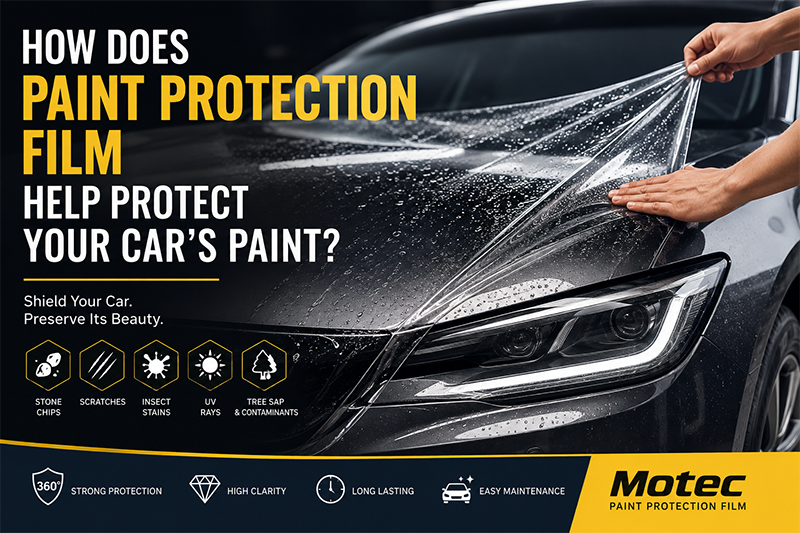
What Is Paint Protection Film?
Paint protection film is a transparent polyurethane film designed to cover automotive paint. Modern PPF is engineered to combine flexibility, optical clarity, and resistance to everyday surface damage.
The film is commonly applied to high-risk areas such as the front bumper, hood, fenders, mirrors, door edges, and rocker panels. Some vehicle owners choose a partial installation, while others prefer to protect most or all painted surfaces.
The main purpose is straightforward: the film takes much of the everyday wear instead of the original paint.
What Can PPF Protect Against?
One of the biggest advantages of PPF is its ability to reduce damage caused by small road hazards. During normal driving, the front of a vehicle can be exposed to gravel, sand, insects, and other particles traveling at speed.
A quality paint protection film can help minimize the appearance of:
* Small stone chips* Light surface scratches
* Road debris marks
* Insect stains
* Tree sap and other contaminants
* Minor scuffs from everyday use
PPF does not make a vehicle completely damage-proof. Severe impacts, deep scratches, accidents, and improper installation can still damage both the film and the paint underneath. However, it can serve as a useful first line of defense against routine wear.
Why Is PPF Useful for Daily Drivers?
For vehicles used every day, maintaining the original paint can be difficult. Parking lots, highways, narrow roads, and busy urban environments all create opportunities for minor exterior damage.
A protective film can be particularly useful for drivers who want to keep their vehicle looking newer for longer without constantly worrying about every small mark.
Another benefit is that PPF can make certain cleaning tasks more convenient. A smooth, well-maintained film surface can help reduce the amount of dirt and contamination that remains attached to the exterior, making regular washing more manageable.
This does not eliminate the need for proper car washing. Instead, it adds another protective layer between the vehicle’s paint and the outside environment.
Does Paint Protection Film Prevent Yellowing?
Modern PPF is designed with anti-yellowing performance, but no transparent film should be described as permanently immune to discoloration.
Long-term exposure to ultraviolet radiation, environmental pollution, chemicals, bird droppings, and tree resin can affect exterior materials over time. The quality of the film, its formulation, installation, maintenance, and exposure conditions can all influence its appearance.
For this reason, buyers should look for PPF with good optical clarity and reliable anti-yellowing properties. Regular maintenance is also important for keeping the film looking clean and clear.
Is PPF Better Than Wax or Ceramic Coating?
PPF and other automotive surface-care products serve different purposes. Wax and coatings are generally used to improve surface appearance, maintenance, and resistance to certain contaminants, while PPF provides an actual physical layer over the paint.
For drivers primarily concerned about stone chips and light physical damage, PPF can offer a more direct form of protection. It can also be combined with other detailing methods when appropriate.
The most suitable option depends on how the vehicle is used, the local driving environment, the owner’s maintenance habits, and the desired level of protection.
Choosing the Right PPF
Not all paint protection films offer the same performance. When comparing products, it is useful to consider film thickness, optical clarity, flexibility, adhesive quality, anti-yellowing performance, surface finish, and expected service life.
Installation quality is equally important. Even a high-quality film may produce poor results if it is incorrectly positioned, stretched excessively, contaminated during installation, or applied to an improperly prepared surface.
Professional installation can help achieve cleaner edges, better coverage, and a more consistent appearance.
For drivers exploring different protection options, Motec Paint Protection Film is one example of a PPF solution designed around everyday automotive paint protection, with an emphasis on clarity and practical surface protection.
Final Thoughts
Paint protection film is not simply an aesthetic accessory. Its main value comes from creating a physical barrier between automotive paint and the hazards encountered during everyday driving.
For owners who want to reduce visible paint damage, preserve the original finish, and spend less time worrying about minor road marks, PPF can be a practical long-term investment. Choosing a suitable film and having it installed correctly are key to achieving the best results.
Ultimately, the goal of PPF is simple: protect the paint today so the vehicle can maintain its appearance for longer.