

When car owners invest in Paint Protection Film (PPF), one of the most common questions is how long the film will last. After all, PPF is designed to protect the vehicle’s original paint for an extended period, so durability is an important factor when choosing a product.
Modern Paint Protection Film is developed with advanced materials that can provide reliable protection against road debris, stone chips, minor scratches, UV exposure, and environmental contaminants. However, the actual service life of PPF depends on several factors, including film quality, installation, climate, driving conditions, and maintenance.
Understanding these factors can help car owners choose the right PPF and keep it performing effectively for as long as possible.
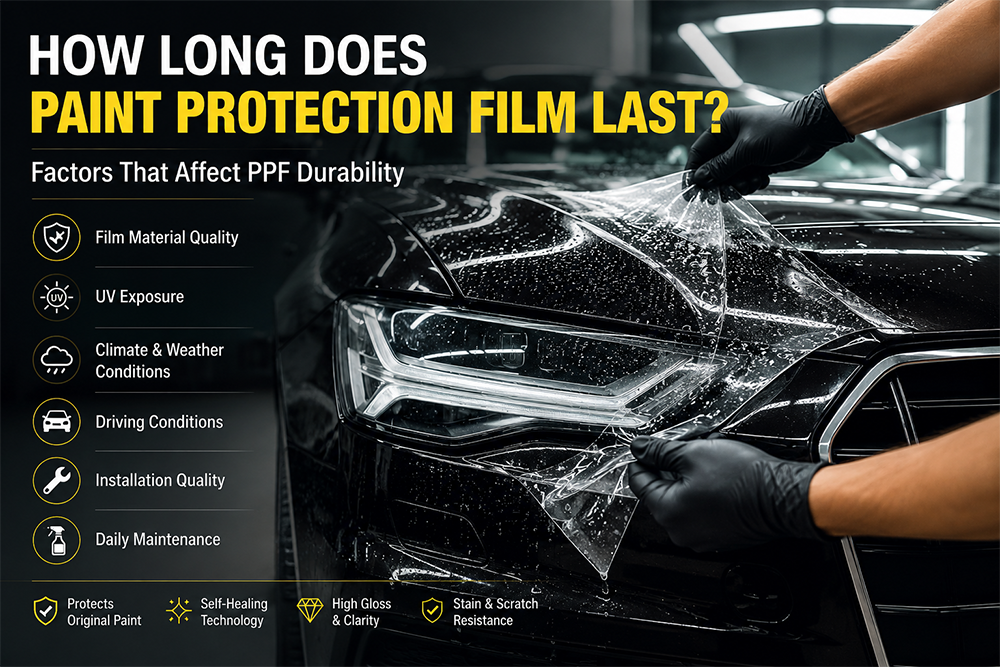
What Is Paint Protection Film?
Paint Protection Film is a transparent protective film applied to painted vehicle surfaces. It is commonly manufactured using thermoplastic polyurethane (TPU), a flexible material designed to provide durability and protection while maintaining good optical clarity.
PPF creates a physical barrier between the vehicle's paint and the outside environment. It can help reduce damage caused by:
* Road debris
* Stone chips
* Minor scratches
* UV exposure
* Bird droppings
* Tree sap* Insect residue
* Everyday environmental contamination
Because the film is transparent, it allows the original vehicle color and paint finish to remain visible.
How Long Can Paint Protection Film Last?
The service life of Paint Protection Film varies depending on the product and conditions in which it is used.
A high-quality PPF product that is properly installed and maintained can provide long-term protection. However, no film performs exactly the same way in every environment.
Several factors influence PPF durability, so car owners should consider the entire lifecycle of the product rather than focusing only on a specific number of years.
1. Film Material Quality
The quality of the raw material is one of the most important factors affecting PPF durability.
High-quality TPU can provide excellent flexibility, impact resistance, transparency, and aging performance. These properties allow the film to remain stable during long-term vehicle use.
A lower-quality film may experience problems such as discoloration, loss of clarity, cracking, or reduced adhesion over time.
For this reason, choosing a reliable manufacturer and high-quality material is an important first step.
2. UV Exposure
Vehicles are exposed to sunlight every day, and prolonged ultraviolet exposure can accelerate material aging.
UV radiation may gradually affect the appearance and performance of protective films. A high-quality Paint Protection Film should therefore have good UV resistance and excellent anti-yellowing performance.
Anti-yellowing technology helps effectively delay the yellowing process, allowing the film to maintain a clearer appearance for longer.
This is particularly important for vehicles that are frequently parked outdoors.
3. Climate and Weather Conditions
Local climate can also affect the service life of PPF.
Vehicles used in areas with strong sunlight, high temperatures, heavy rainfall, or significant temperature changes may experience greater environmental exposure.
The combination of heat, UV radiation, moisture, and pollution can influence the long-term condition of the film.
Choosing a PPF designed for durability and maintaining it properly can help reduce the effects of these environmental factors.
4. Driving Conditions
Driving habits also influence how quickly PPF wears.
A vehicle that frequently travels on highways may experience more exposure to flying gravel, sand, and road debris than a vehicle used mainly for short urban journeys.
Areas such as the front bumper, hood, mirrors, and fenders generally experience greater exposure to road debris.
Installing PPF on high-impact areas can therefore be an effective way to protect the most vulnerable parts of the vehicle.
5. Installation Quality
Even an excellent PPF product requires professional installation.
Improper installation may result in:
* Air bubbles
* Wrinkles* Uneven edges
* Poor adhesion
* Edge lifting
These problems can affect both appearance and durability.
Professional installers carefully prepare the vehicle surface and apply the film according to the characteristics of the material. Proper installation helps ensure that the PPF remains securely attached and performs as intended.
6. Daily Maintenance
Regular maintenance is another important factor in extending PPF service life.
After installation, vehicle owners should clean the film regularly to prevent dirt and contaminants from accumulating on the surface.
Recommended maintenance practices include:
* Washing the vehicle regularly
* Using mild automotive cleaning products
* Avoiding aggressive chemicals
* Removing bird droppings and tree sap promptly
* Following professional maintenance recommendations
Proper care can help preserve the film's appearance and protective performance.
Signs That Your PPF May Need Replacement
Although high-quality PPF is designed for long-term use, it may eventually show signs of aging.
Common signs include:
* Significant yellowing* Cracking
* Peeling edges
* Loss of transparency
* Noticeable surface damage
* Reduced adhesion
When these signs become obvious, replacing the affected film can help restore the appearance and protection of the vehicle.
It is not always necessary to replace the entire vehicle's PPF at once. In many cases, individual panels or heavily used areas can be replaced separately.
How Can You Extend the Life of Paint Protection Film?
Car owners can take several simple steps to maximize PPF performance.
Wash the Vehicle Regularly
Regular cleaning removes dirt, dust, and environmental contaminants before they accumulate on the film.
Use Suitable Cleaning Products
Harsh chemicals may negatively affect some protective film surfaces. Using products recommended for automotive surfaces is a safer approach.
Remove Contaminants Quickly
Bird droppings, tree sap, and insect residue should be cleaned as soon as reasonably possible to minimize prolonged contact with the film.
Avoid Aggressive Cleaning Methods
Excessive pressure or inappropriate cleaning tools may damage the film surface or edges.
Follow Professional Care Guidelines
Different PPF products may have specific maintenance recommendations. Following the manufacturer's guidance can help maximize service life.
Why Choose Motec Paint Protection Film?
For car owners looking for long-term automotive paint protection, product quality is an important consideration.
Motec Paint Protection Film focuses on providing reliable paint protection solutions designed around transparency, durability, and excellent anti-yellowing performance.
By helping protect vehicle surfaces from road debris, environmental exposure, and everyday wear, Motec Paint Protection Film can support long-term preservation of the original automotive paint.
Choosing a dependable PPF product and combining it with professional installation and proper maintenance can provide a more consistent protection experience.
Conclusion
The lifespan of Paint Protection Film depends on much more than the film itself. Material quality, UV exposure, climate, driving conditions, installation quality, and maintenance all play important roles.
A high-quality PPF installed correctly and properly maintained can provide long-term protection while helping preserve the original appearance of a vehicle.
For drivers who want to protect their cars from stone chips, minor scratches, UV exposure, and environmental contaminants, investing in a reliable Paint Protection Film is a practical approach to long-term vehicle care.
By selecting a quality product such as **Motec Paint Protection Film**, choosing professional installation, and following proper maintenance practices, vehicle owners can help keep their cars looking cleaner, newer, and better protected for longer.